Pages

Showing posts with label Okinawa. Show all posts

Tuesday, April 3, 2018

Okinawan Cuisine (沖縄料理)

Okinawan cuisine differs significantly from Japanese cuisine due to the islands' unique history, during which its food culture was influenced especially by China, South East Asia, Japan and the United States, and due to the different climate with its effects on agriculture and the appetite.

Okinawan dishes are widely available at restaurants throughout the prefecture. For trying out a variety of dishes, we recommend a visit to a local izakaya, where multiple smaller dishes are shared at the table. Some establishments offer live Okinawan music to further enhance the dining experience, especially at restaurants in tourist districts like Naha's popular Kokusaidori Street.

Image result for Okinawan cuisine
沖縄料理は日本料理から、その食文化は、中国、東南アジア、日本、米国が特に影響を受けた時に、島のユニークな歴史に大きく異なり、による農業と食欲に及ぼす影響と異なる気候へ。

沖縄料理は県全体のレストランで広く入手可能です。様々な料理を試し、私たちは複数の小さな皿をテーブルに共有されている地元の居酒屋への訪問をお勧めします。一部の事業所では、特に観光地区内のレストランで、さらに食事の経験を強化するために、ライブ沖縄音楽を提供しています。

Read On >>>

Sunday, July 9, 2017

Hedo Misaki (Cape Hedo)

North of Nago, Okinawa Honto is only scarcely populated and mainly covered by forests and hills. Cape Hedo (辺戸岬) is the island's northernmost tip, offering spectacular views of the cliffy coast.

The main approach to Hedo Misaki leads along the western coast, where, halfway between Nago and the cape, there is a hiking trail to the Hiji Waterfall and a JAL resort hotel around Okuma Beach.


The less direct approach to Hedo Misaki along the more scenic, less developed eastern coast is recommended due to its beautiful coastal scenery. However, in order to explore the eastern coast, you will need your own transportation, such as a rental car, because there is no scheduled bus service along the eastern coast to Hedo Misaki.


Photos:

Image Source
Image Source
Read On >>>

Wednesday, July 20, 2016

Tsuboya Pottery District

Naha's Tsuboya district has been a center for Okinawan pottery since the era of the Ryukyu Kingdom, and many pottery workshops are still concentrated in the area today. The Tsuboya Pottery Museum illustrates the history and the techniques of Tsuboya pottery.


Dozens of workshops are still operating after being passed down through generations. Two forms of pottery are produced here; Arayachi, which is unglazed pottery, and Joyachi, which is glazed pottery.

Arayachi was typically used for large storage vessels for awamori, water, or bean paste. Some smaller items were created for measuring devices. Joyachi is more colorful, and usually made into vases, teapots, bowls, plates, and flasks for carrying awamori.


This entire district flourished many years ago because of the Ryukyuan Empire’s increased trading with China and Southeast Asia. Then after WWII there was a shortage of necessary items for everyday life, so Tsuboya District produced many needed items.


Photos:
Read On >>>

Wednesday, April 6, 2016

Shuri Castle (首里城)

A city district of Naha today, Shuri is the name of the former capital of the Ryukyu Kingdom. Shuri Castle (首里城) served as the administrative center and residence of the Ryukyu kings for several centuries until Okinawa became a Japanese prefecture in 1879. The castle is included as one of the UNESCO World Heritage designated Castles of the Ryukyu Kingdom sites.

Naha Shuri Castle50s3s4500.jpg

Shuri Castle was originally built in the late 1300s, and played an integral role in the political unification of the island. Wars and fires destroyed the castle multiple times over the centuries, most recently in the Battle of Okinawa in 1945. The current buildings are beautiful reconstructions dating from 1992. The approach to the castle's central buildings leads through multiple gates, including the well known Shureimon Gate. The castle's hilltop location allows for nice views over Naha along the way.


Photo:

Read On >>>

Wednesday, October 28, 2015

Churaumi Aquarium (美ら海水族館)

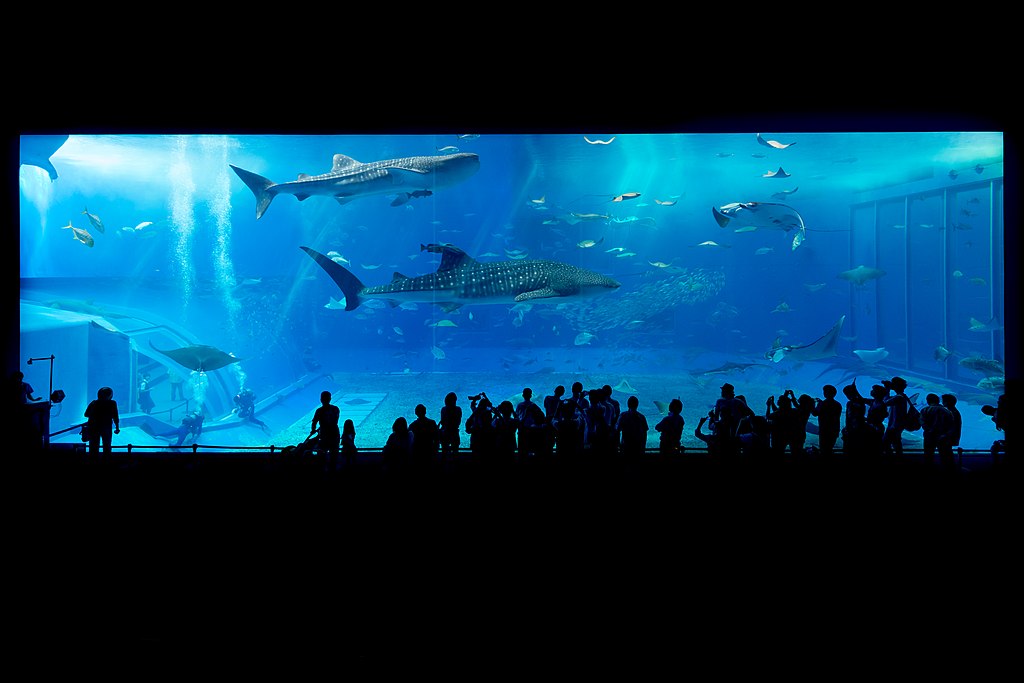
The Churaumi Aquarium (美ら海水族館) is widely considered Japan's best aquarium. It is the main attraction of the Ocean Expo Park on the former grounds of the 1975 International Ocean Expo in northern Okinawa Honto. The aquarium was completely redesigned and reopened in 2002.


The highlight of a visit to the Churaumi Aquarium is the massive Kuroshio Tank, one of the largest in the world. The tank takes its name from the warm Kuroshio current which plays a large part in the variety of Okinawa's of marine life. The tank contains a wide variety of species, the most striking of which are the giant whale sharks and manta rays.

In addition to the main aquarium building, there are a few outdoor pools near the waterfront where animal shows of dolphins, sea turtles and manatees can be viewed free of charge. There are only a few shows per day, so visitors might want to check show times before entering the aquarium.

Photo;
"Okinawa Aquarium" by Jordy Meow - Own work. Licensed under CC BY-SA 3.0 via Commons - https://commons.wikimedia.org/wiki/File:Okinawa_Aquarium.jpg#/media/File:Okinawa_Aquarium.jpg
Read On >>>